LÉ
2020
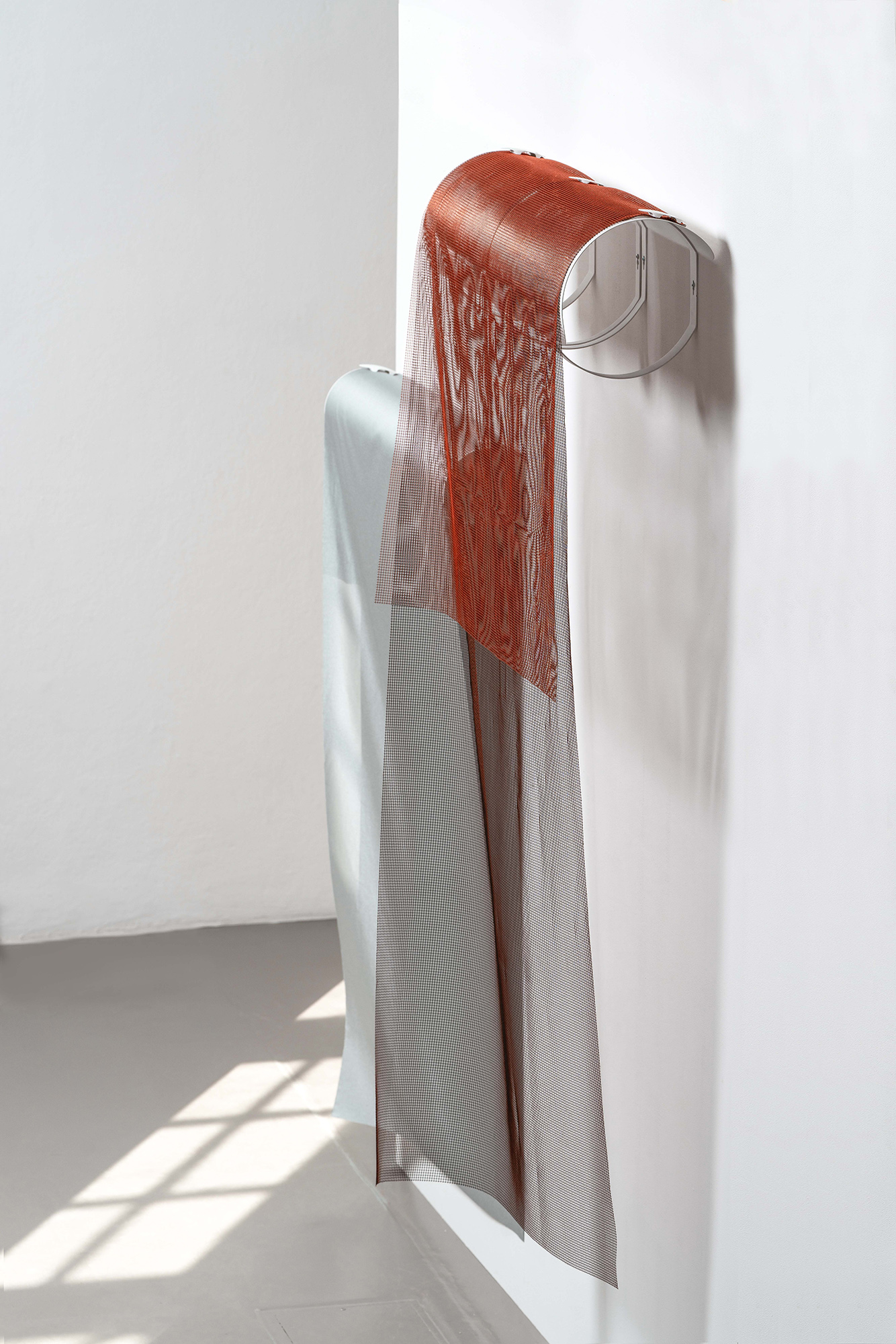
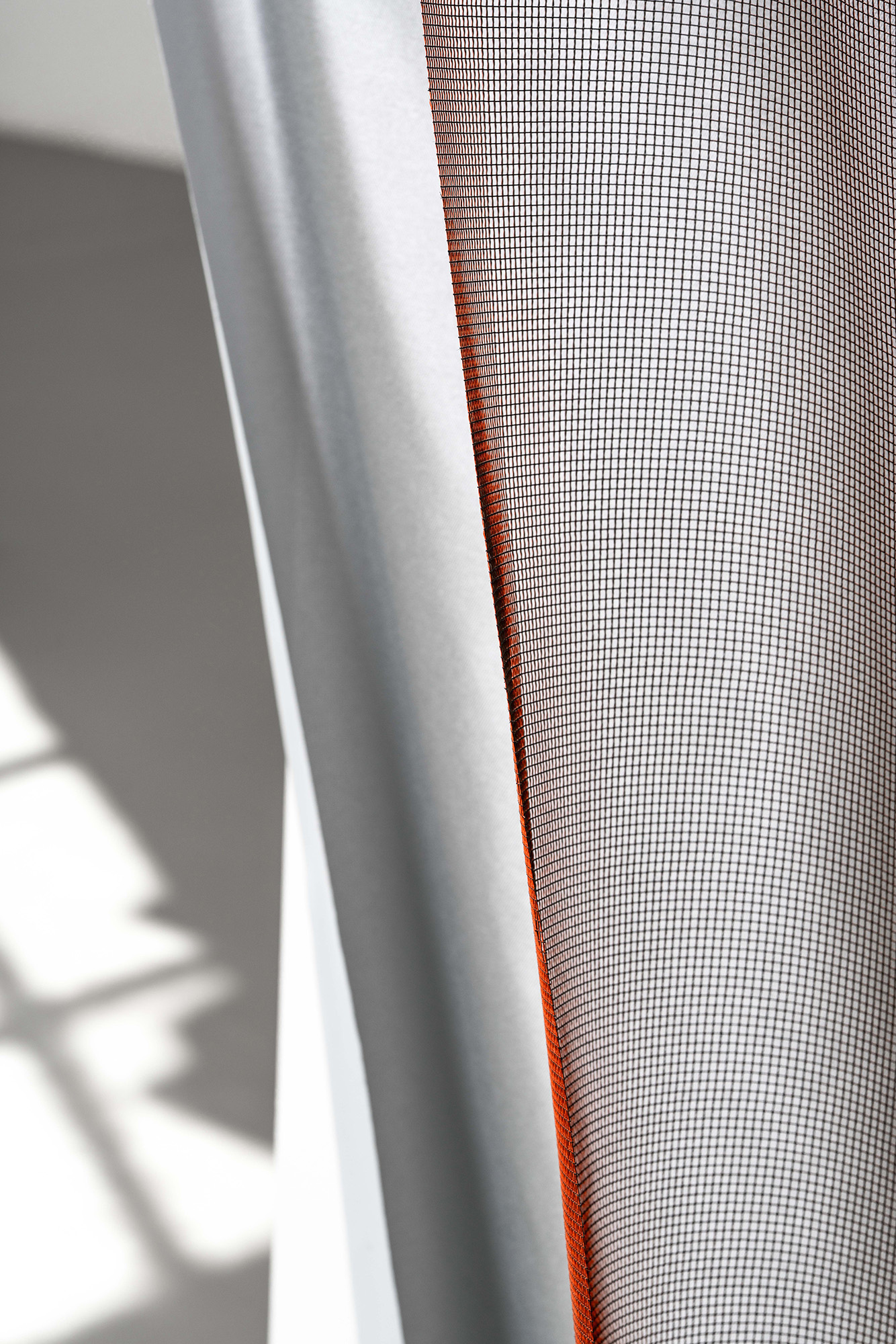
Lé ist das Ergebnis der Diplomarbeit mit dem Titel „Responsive Flächen - Textile Eingriffe in den Wohnraum“. Der Entwurf ist ein Vorschlag, wie die Rolle von Textilien im Wohnraum anders gestaltet und kommuniziert werden kann. Textilen Flächen wird eine neue Form gegeben als Wohnobjekte, die auf deren teilweise unsichtbare und unbeachtete Qualitäten aufmerksam machen.
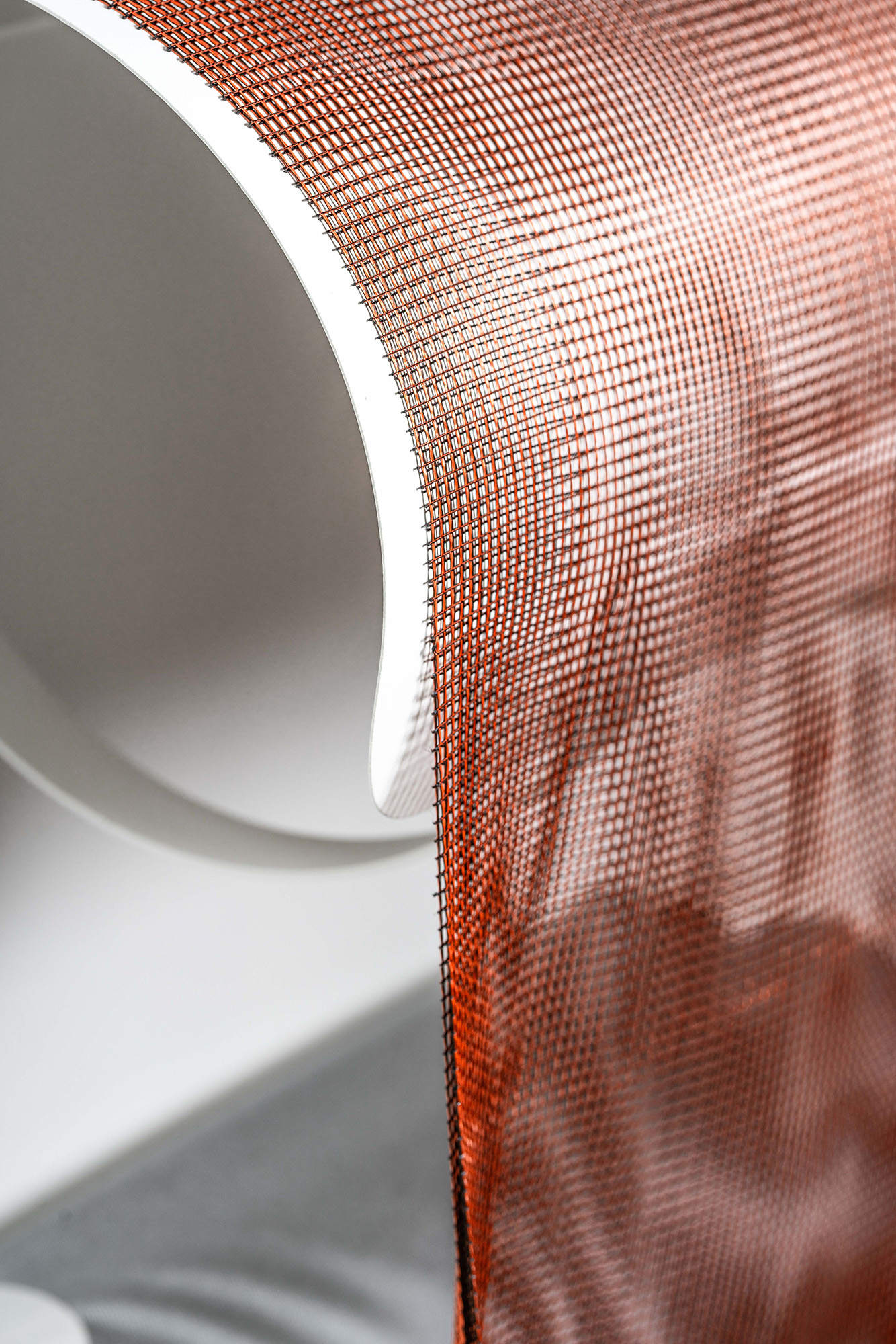
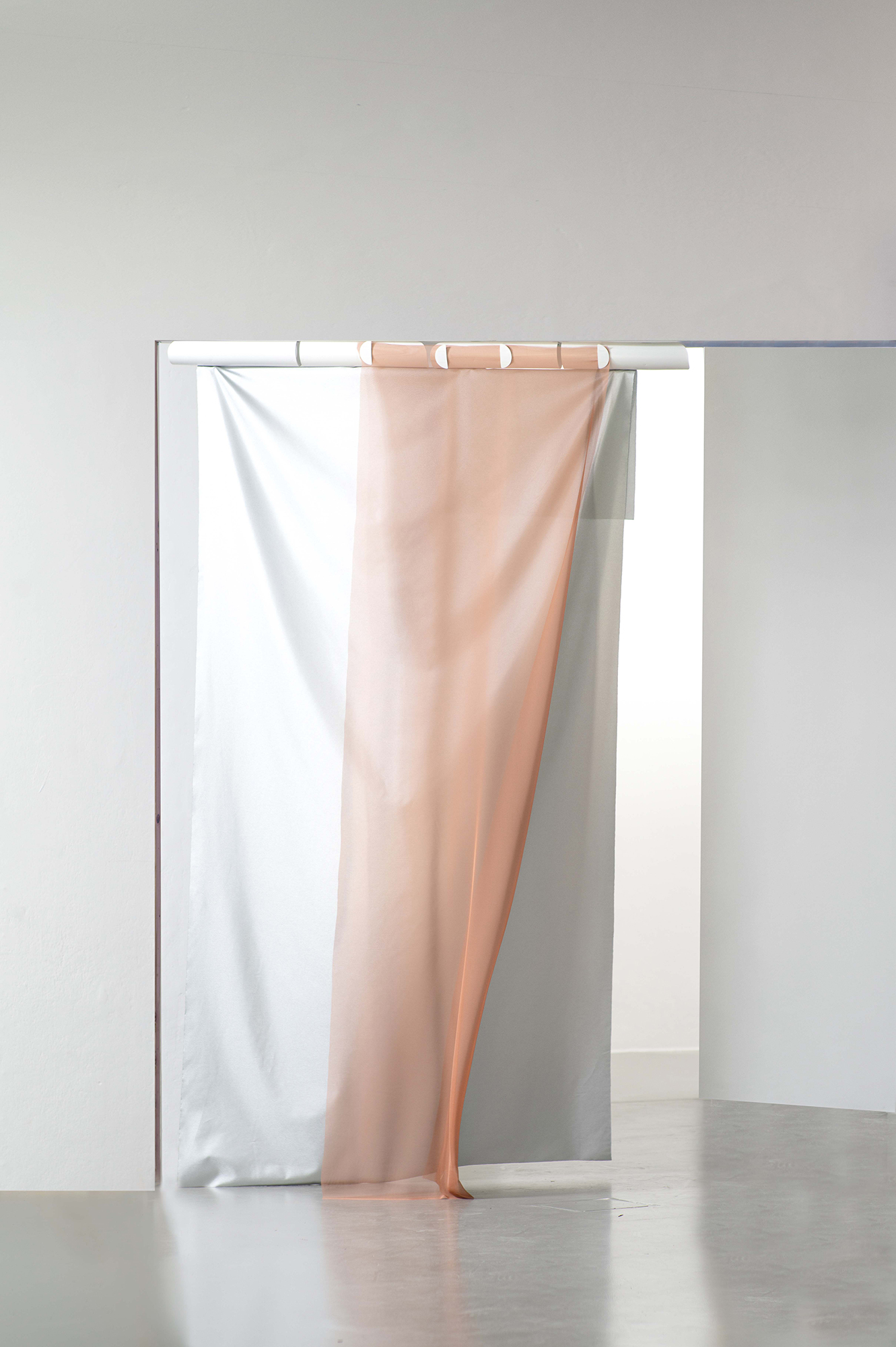
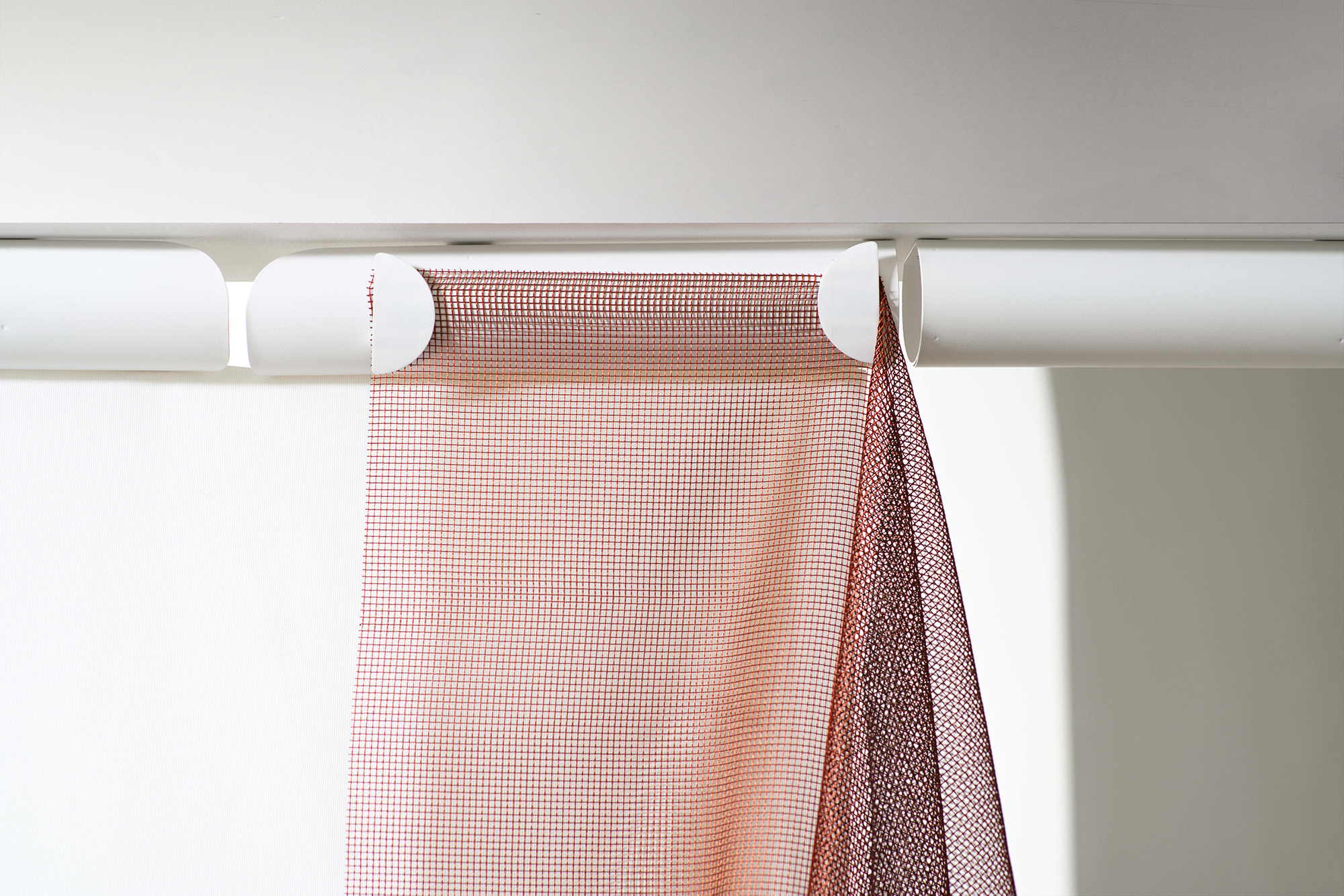
Stoffbahnen bespielen den Raum in veränderbaren Kompositionen, in Ebenen, Schlaufen oder Falten. Dünne Profile aus Stahlblech ermöglichen das Aufhängen in unterschiedlichen Positionen und Anordnungen, um in diversen Formationen wahlweise an der Decke, an der Wand oder vor dem Fenster befestigt zu werden. Sie dienen als Halterung für textile Flächen, die mittels magnetischer Verbindungselemente frei auf der metallischen Fläche zu arrangieren sind. Dabei können die Stoffe raumteilend über dem Boden schweben, Ebenen bilden, Dinge verstecken, abschirmen, Schatten spenden, Schall dämpfen, das Raumklima regulieren oder als dekorative Skulpturen und Bilder dienen.
Lé is the result of the diploma thesis entitled "responsive surfaces - textile interventions in the living area". The design is a proposal about how the role of textiles in the domestic space can be displayed and communicated differently. Textile surfaces are given a new form to as furniture objects that draw attention to their partly invisible and overlooked qualities.
Fabric panels are diplayed in changeable compositions, in layers, loops or pleats. Thin-walled sheet-metal profiles can be hung in different positions and arrangements, attached either to the wall, the ceiling or near the window. They provide attachment for the textile surfaces that are to be arranged freely on the metal surface by the means of magnetic connectors. Thus the fabrics may hover above the ground dividing space, build layers, hide things, screen, give shade, absorb sound, regulate the indoor climate or serve as decorative sculptures and images.
fabrics: Création Baumann, photos: Liang Zhang, Lea Lüdtke